Skip to content

People

The lab, one researcher at a time.

The Sustainable Photonic Materials Lab is a small, hands-on group. Everyone in it works directly on the materials they study: synthesis, characterisation and measurement.

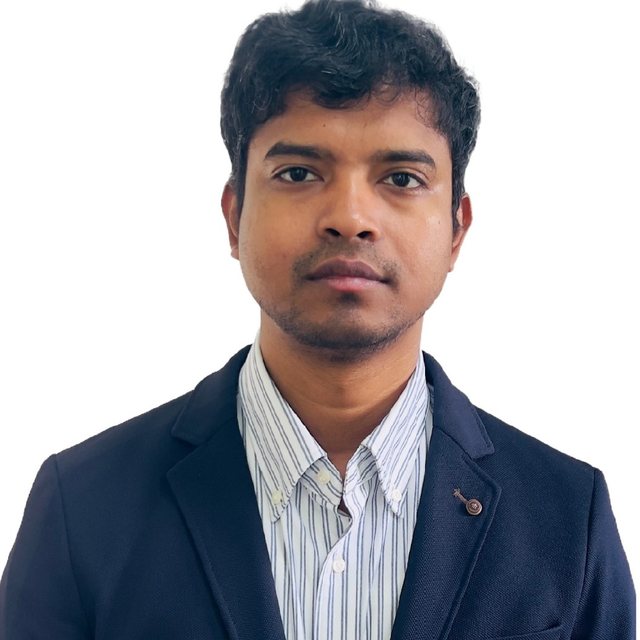
Portrait of Barun Kumar Barman

Principal investigator · since 2024

Principal investigator

Barun Kumar Barman

Sustainable photonic materials: rare-earth-free and metal-free optical emitters, micro-resonators and photonic barcodes.

Barun Kumar Barman leads the Sustainable Photonic Materials Lab at the Centre for Interdisciplinary Research, SRM University AP. He trained as a chemist and materials scientist, and his work is on fluorescent carbon-based materials that can be fabricated into micro-resonators, optical gain media and transparent functional films. He trained as a postdoctoral researcher at the National Institute for Materials Science (NIMS) in Japan, and earlier published on electrocatalysis and energy-storage materials. The Sustainable Photonic Materials Lab combines that earlier work on sustainable carbon materials with photonic function in one programme.

Full profile and publication list

Postdoctoral researchers

Two postdocs, two approaches to the same question

Nonlinearity and the design of optical systems; the carbon chemistry that makes them possible. The postdoctoral work brings synthesis and photonics together.

Portrait of Vijayakumar Balakrishnan

Postdoc · since 2026

Vijayakumar Balakrishnan

Nonlinear optics, light-matter interaction and nanophotonics: optical limiting in doped phosphates and nanostructured nonlinear optical materials.

Vijayakumar Balakrishnan works on nonlinear optics and light-matter interaction in nanostructured materials. His record is in optical limiting: rare-earth and transition-metal doped phosphates, tungstates and carbon-nitride heterojunctions, and the mechanisms behind two-photon absorption, optical Kerr nonlinearity and ultrafast photo-excited carrier dynamics. He trained in the optical-nonlimiting group of Prof. T. C. S. Girisun at the Indian Institute of Technology Madras, and his work on defect-state enhanced third-order nonlinearity in Bi-doped MnWO4 and on Zn-doped Bi2WO6 showed how structural distortion and dopant energy levels set the limiting threshold. At the Sustainable Photonic Materials Lab he works on the light-matter side of the same question: what a nonlinear response does inside a confined optical field, and how a micro-resonator changes it. He is the co-author, with the lab's principal investigator, of the 2026 paper on metal-free single-component white-light emission and visible-to-NIR whispering-gallery micro-emitters published in RSC Applied Interfaces.

Profile →
Portrait of Hitaishi V

Postdoc · since 2026

Hitaishi V

Nonlinear optics, supercontinuum generation and waveguide design: dispersion-engineered chalcogenide waveguides, structured light and physics-informed inverse design.

Hitaishi V is a physicist working on nonlinear optics and integrated photonics, with a focus on supercontinuum generation in dispersion-engineered waveguides. He completed his PhD in Physics at VIT-AP University in 2025, working with Prof. Nandam Ashok on the design and numerical analysis of chalcogenide waveguides. His published work spans mid-IR supercontinuum generation in D-shaped and semi-ellipse core waveguides at 4 μm, broadband supercontinuum in dispersion-engineered As2Se3–GeAsSe–GeAsS waveguides at 6 μm, and tellurium-based chalcogenide waveguides for dispersion and supercontinuum applications. Alongside this he has contributed to Tamm–Fano plasmonic and slot-waveguide microring sensors for refractive-index and glucose sensing. He writes open-source computational photonics. His package photonics_helper is published on PyPI and carries a generalised nonlinear Schrödinger equation solver with vector and multimode engines, a Raman response database spanning 44 materials, second- and third-order nonlinear optics, FROG trace retrieval and a transfer-matrix method for distributed Bragg reflectors. In the lab he works on the computational side of photonic materials: inverse design and physics-informed machine learning applied to micro-resonators and gain media. Before his PhD he studied at JSS College of Arts, Commerce and Science, Mysuru, and at Dayananda Sagar College, Bengaluru. He is GATE-qualified in Physics.

Profile →

Seats still to fill

The published structure of the lab, waiting for names.

The lab publishes the shape of the group before it publishes the people in it. These are the positions the structure reserves. Each is filled as the work is done, and each comes with a research topic attached.

Claim one of them
  • PhD Scholar Seat 01 · from 2026
  • PhD Scholar Seat 02 · from 2026
  • Research Assistant Seat 03 · from 2026